Gum Disease Treatment: What the Process Involves, Who It Suits, and What to Expect
Considering gum disease treatment abroad? This guide covers what the process involves, who is suitable, realistic outcomes, genuine risks, and what to ask first
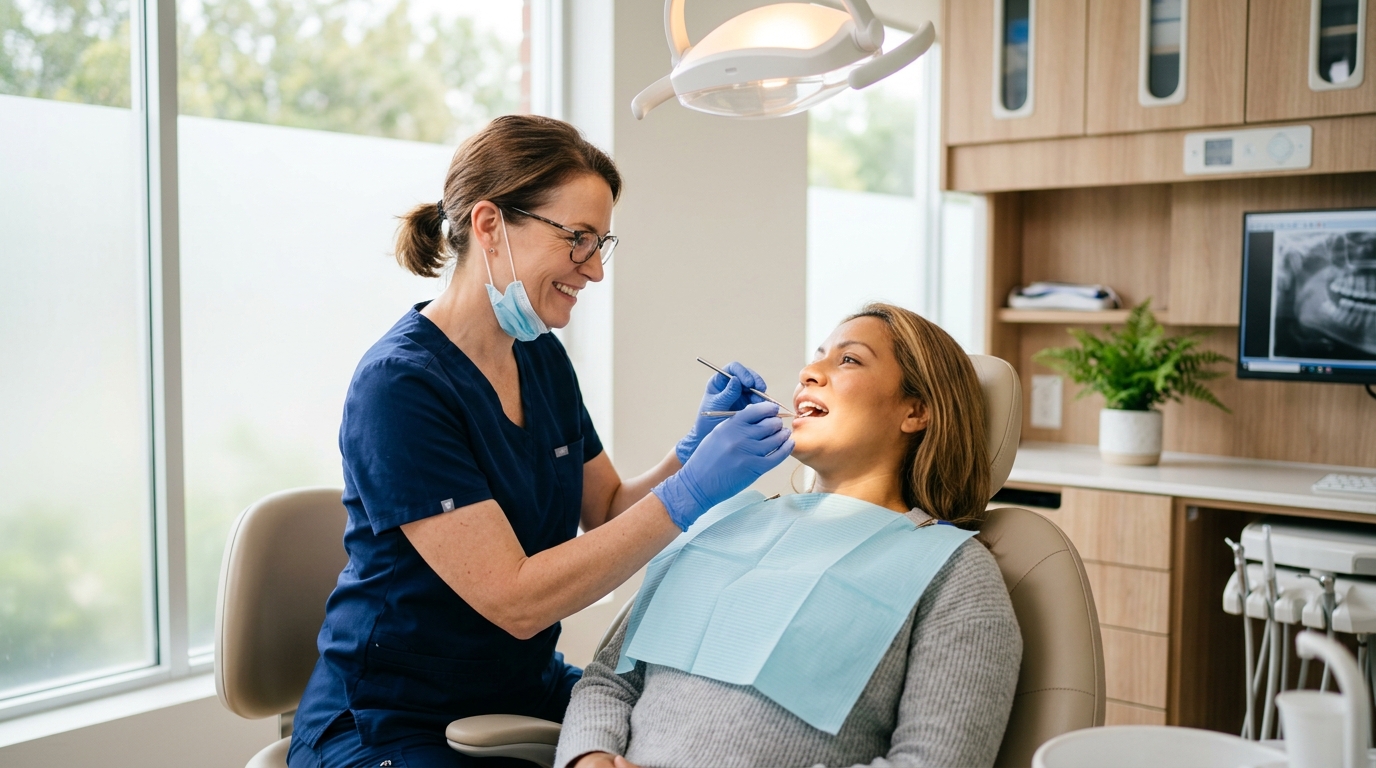
Gum disease is one of the most common dental conditions in adults, yet it is frequently underdiagnosed until it has progressed beyond its earliest stage. Many people seek treatment only once they notice persistent bleeding, receding gumlines, or loosening teeth — by which point the underlying bone and tissue may already have suffered measurable damage. Understanding what treatment actually involves, what it can realistically achieve, and where its limits lie helps anyone considering their options make a more grounded decision.
What gum disease is and why stage matters
Gum disease exists on a spectrum. Gingivitis is the earliest stage: inflammation of the gum tissue caused by bacterial plaque accumulating along and below the gumline. At this stage, the supporting bone is not yet affected, and the condition is generally reversible with professional cleaning and improved home care.
When gingivitis is left untreated, it can progress to periodontitis. Here, the infection spreads below the gumline and begins to destroy the bone and connective tissue that hold teeth in place. Pockets form between the teeth and gums, and bacteria colonise these spaces. Periodontitis is classified by severity — mild, moderate, or severe — and that classification directly determines which treatments are appropriate. It also affects what outcomes are realistic: early-stage periodontitis responds well to non-surgical intervention, while advanced cases may require surgery and still result in some permanent structural loss.
Non-surgical treatment: scaling and root planing
The foundation of periodontal treatment for most patients is a procedure called scaling and root planing, sometimes referred to as a deep clean. It is different in scope from a standard hygienist appointment. A periodontist or trained dental professional uses manual instruments and, in most cases, ultrasonic scalers to remove calcified deposits (calculus) from tooth surfaces both above and below the gumline. Root planing then smooths the root surfaces to discourage further bacterial adhesion and to allow the gum tissue to reattach more effectively.
The procedure is typically carried out under local anaesthetic, divided across two or more appointments to work through each quadrant of the mouth. Some sensitivity and mild discomfort in the days following each session is common. The gums may appear to recede slightly after treatment — this usually reflects the reduction of inflamed, swollen tissue rather than an actual worsening of recession.
For many patients with mild to moderate periodontitis, scaling and root planing achieves a meaningful reduction in pocket depth and stabilises the condition. A reassessment appointment, typically six to eight weeks later, allows the clinician to measure whether the pockets have responded. Where they have not reduced sufficiently, surgical options are discussed.
Surgical options
When non-surgical treatment has not achieved adequate pocket reduction, or when the anatomy of the bone loss makes access difficult without surgery, several procedures may be considered. The decision depends on the individual's clinical findings, not a standard protocol.
- Flap surgery (pocket reduction surgery): the gum tissue is folded back to give direct access to root surfaces and bone. Deposits are removed, irregular bone contours may be reshaped, and the tissue is sutured back into a position that reduces pocket depth.
- Bone grafting: where significant bone loss has occurred, grafting material — which may be synthetic, processed donor tissue, or taken from elsewhere in the mouth — can be placed to encourage regeneration of lost bone. Results are variable between patients and depend on the extent and pattern of loss.
- Guided tissue regeneration: a membrane is placed between the bone and gum tissue to encourage the growth of bone and periodontal ligament rather than gum tissue alone. This is typically used alongside bone grafting in selected cases.
- Gum grafting: where recession has exposed root surfaces, tissue taken from the palate or from a processed donor source can be grafted to cover exposed areas and reduce sensitivity. This does not reverse bone loss, but it can protect the root surface and improve the stability of the gumline.
Who is a suitable candidate
Assessment for periodontal treatment begins with a full periodontal charting — a systematic measurement of pocket depths around every tooth, combined with radiographs to assess bone levels. This provides the clinical picture needed to determine both what treatment is indicated and what outcomes are realistic.
Several factors influence treatment decisions and outcomes. Smoking significantly impairs healing and reduces the effectiveness of both non-surgical and surgical periodontal treatment; this is consistently documented in the clinical literature, and clinicians will raise it directly. Systemic conditions, particularly uncontrolled diabetes, are associated with more aggressive periodontal disease and slower healing. Certain medications can cause gum overgrowth or affect bleeding. None of these factors automatically rules out treatment, but they affect the approach and the realistic prognosis, which is why a thorough medical and dental history is essential before any plan is agreed.
Patients who are pregnant are not typically treated with elective surgical procedures, though non-surgical hygiene treatment is generally considered safe and is often recommended during pregnancy to manage inflammation. A clinician assesses the timing of any treatment on an individual basis.
Maintenance and long-term management
Periodontitis is a chronic condition. Active treatment — whether non-surgical or surgical — aims to achieve stability, not a permanent cure. Once the active phase is complete, ongoing supportive periodontal therapy is required to maintain the results. This typically means professional cleaning and reassessment at intervals of three to four months, at least in the first year, with the frequency adjusted based on how the individual's condition responds over time.
Without a structured maintenance programme, the condition can reactivate. The frequency of ongoing care, and whether it is provided by a general dentist or a specialist periodontist, is part of the planning conversation and something to consider carefully when treatment takes place abroad.
Genuine risks and trade-offs
Periodontal treatment carries real trade-offs that are worth understanding before committing. Gum recession following deep cleaning or surgery is a common outcome — the gumline may sit lower than before treatment, leaving teeth appearing longer. This is often unavoidable when inflamed tissue reduces and the underlying anatomy is revealed. Increased cold sensitivity in the weeks following treatment is also common and usually, though not always, diminishes over time.
Surgical procedures carry the standard risks associated with any oral surgery: infection, delayed healing, swelling, and the possibility that the procedure does not achieve the intended reduction in pocket depth. Bone grafting outcomes are variable; regeneration does not always occur to the expected degree, and in some cases a graft does not integrate.
Teeth that have lost significant bone support may not be salvageable, regardless of treatment. A clinician should give a clear assessment of which teeth have a good prognosis and which are considered uncertain or hopeless before any treatment plan is finalised. This is a conversation worth having explicitly.
What to ask before committing to treatment
- Has a full periodontal chart and radiographic assessment been completed, and will those findings be shared with me?
- What stage and severity of periodontitis is present, and how does that affect the treatment plan?
- Which teeth have a good, uncertain, or poor long-term prognosis?
- Is non-surgical treatment being tried first, and at what point would surgical intervention be recommended?
- What does the post-treatment maintenance schedule involve, and how is that managed if I return home after treatment abroad?
- Are there medical factors — including smoking history, diabetes, or current medications — that will affect my healing or long-term outcomes?
- Will I receive a written treatment plan and all relevant clinical records to share with my dentist at home?
Travelling to Turkey for periodontal treatment
Periodontal treatment is commonly undertaken by international patients in Istanbul and Antalya, both of which have a well-established infrastructure for dental tourism. The length of stay depends significantly on the scope of treatment. For non-surgical scaling and root planing across multiple quadrants, a stay of three to five days is a typical range, allowing for staged treatment sessions with recovery time in between. For cases involving surgical procedures — flap surgery, bone grafting, or gum grafting — a stay of five to seven days or longer is more common, to allow for post-operative review before travel.
International patients researching their options can explore dental treatment packages to understand what is typically included in structured care arrangements for those travelling from abroad.
Accommodation and airport transfer arrangements are commonly made for international patients undergoing dental treatment in Turkey, with details co-ordinated ahead of arrival. The post-treatment maintenance aspect requires careful planning: because periodontal care is long-term, a clear agreement with a dentist at home about ongoing supportive appointments is an important part of the preparation, not an afterthought.
Before making a decision
Gum disease treatment abroad can be a practical option for patients facing significant treatment needs, but it requires more forward planning than most dental procedures because of the ongoing maintenance component. The active treatment phase can be completed during a visit; the long-term management cannot. Anyone considering this route should factor in how continuity of care will be handled when they return home, and should be clear on their clinical diagnosis and prognosis before agreeing to any treatment plan.