Teeth Whitening: What the Treatment Involves, Who It Suits, and What to Expect
Considering teeth whitening abroad? This guide covers how the treatment works, who is suitable, realistic results, risks, and questions to ask before committing
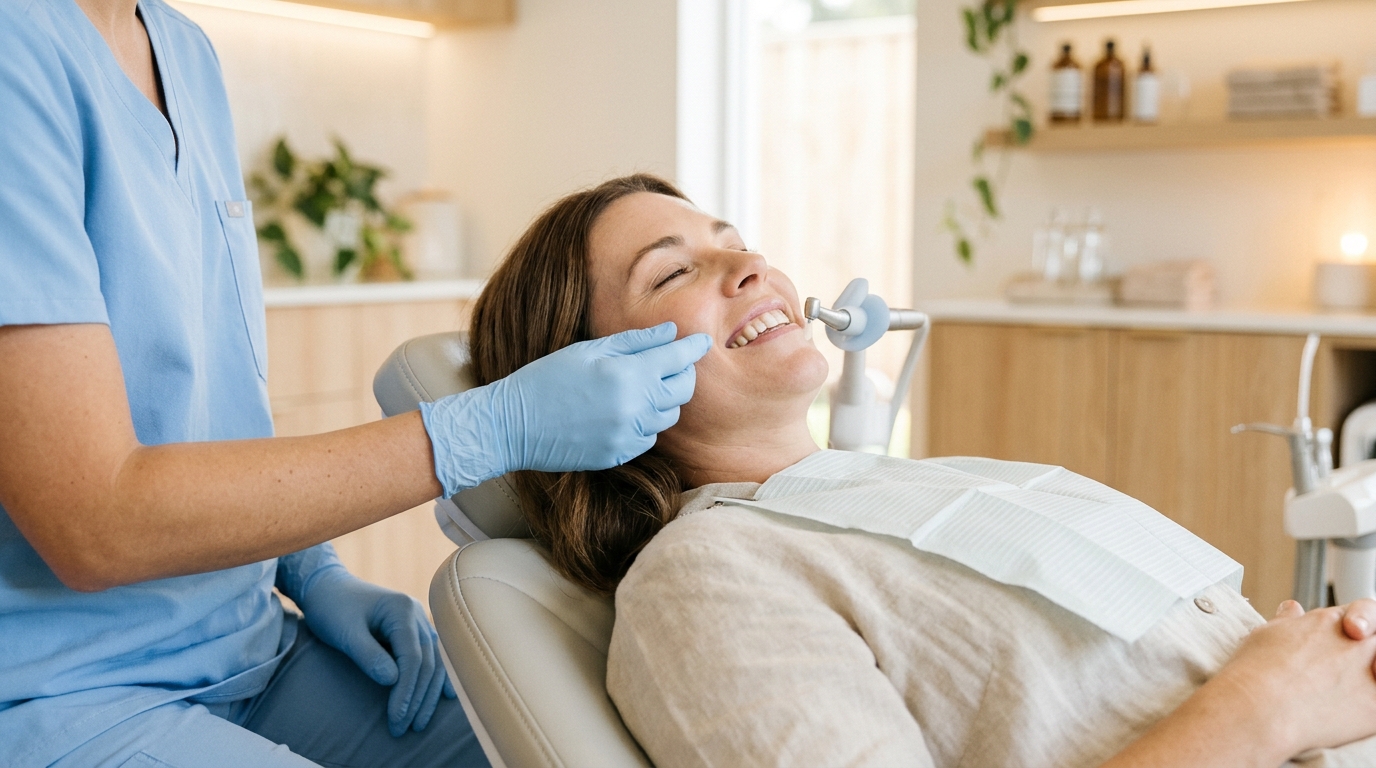
Tooth discolouration is one of the most common reasons people seek cosmetic dental treatment. Whether the cause is years of tea and coffee, the residual effects of certain antibiotics taken in childhood, or simply the natural darkening that comes with age, the options available and what they can realistically achieve depend heavily on what is causing the discolouration in the first place.
Professional teeth whitening uses a peroxide-based bleaching agent — typically hydrogen peroxide or carbamide peroxide — to lighten the shade of natural tooth enamel. The concentration used in a clinical setting is higher than anything available over the counter, which is why results differ significantly between professional treatment and consumer products. How many shades of improvement a person actually sees, however, varies from patient to patient and is not predictable in advance.
How the treatment is carried out
In-clinic whitening is typically completed in a single appointment lasting between one and two hours. A clinician first places protective barriers around the gums and soft tissue to isolate the teeth, then applies the bleaching gel to the tooth surfaces. Some systems use a light or laser source alongside the gel, on the basis that activation may improve uptake — though clinical evidence on whether the light itself drives additional whitening, as opposed to the gel alone, remains mixed.
Take-home whitening is the alternative or, in some treatment plans, the follow-on to an in-clinic session. Custom-fitted trays are made from impressions of the patient's teeth; the patient applies a lower-concentration gel at home for a set period each day, usually over one to three weeks. The trays improve contact between the gel and tooth surface, which is why custom trays produce more consistent results than generic strip products.
A combined approach — an initial in-clinic session followed by a course of at-home maintenance — is commonly recommended when a patient has significant discolouration or wants to extend the longevity of the outcome. The precise protocol is determined at consultation based on the initial shade assessment and the nature of the staining.
Who is and is not suitable
Whitening works on natural tooth enamel. It has no effect on dental restorations — crowns, veneers, ceramic bridges, and composite bonding do not respond to peroxide-based bleaching agents. If a patient has visible restorations at the front of the mouth, their existing shade was set at the time of placement; whitening the surrounding natural teeth may create a noticeable mismatch. This is a routine consideration that a clinician raises before any treatment is planned.
Intrinsic staining — discolouration that originates inside the tooth structure rather than on its surface — responds less predictably to external bleaching. Tetracycline-related staining, fluorosis, and discolouration from trauma fall into this category. Whitening may produce some improvement, but the degree is less certain, and a clinician may suggest alternative treatments such as veneers or bonding for these cases.
- Active tooth decay or untreated gum disease should be resolved before whitening is considered.
- Patients with significant enamel erosion may find the treatment increases sensitivity to a degree that makes it unsuitable.
- Whitening is not recommended during pregnancy.
- Children and adolescents with developing teeth are generally not considered appropriate candidates.
- Patients with known sensitivity to peroxide should raise this at consultation.
Realistic expectations for results
Professional whitening can produce a meaningful improvement in tooth shade for many patients with surface or age-related discolouration. The degree of change varies: some patients see a pronounced difference; others see a more modest improvement. This depends on the original cause and severity of the discolouration, the baseline shade of the enamel, and the patient's individual response to the bleaching agent. A shade guide used at consultation gives a rough indication, but the precise outcome cannot be stated in advance.
The results are not permanent. Natural teeth will re-stain over time, particularly with ongoing consumption of coffee, tea, red wine, and tobacco. Periodic top-up treatment is typically required to maintain a given shade. How frequently that is needed depends on individual habits and the rate of natural re-staining.
Risks and side effects
Tooth sensitivity is the most frequently reported side effect. It typically occurs during or shortly after treatment and resolves within a few days for most patients, though the duration and severity vary. Sensitivity toothpaste used in the days before and after treatment is commonly recommended as a precaution.
Gum irritation can occur if the bleaching agent contacts soft tissue. In a clinical setting this is minimised by the protective barriers applied before treatment, but some mild transient irritation is not uncommon. Using poorly fitting generic trays at home increases this risk, which is why custom trays are preferred for take-home treatment.
Overuse of whitening products — including high-frequency use of over-the-counter strips or prolonged use without clinical supervision — has been associated with enamel damage over time. Professional treatment involves a controlled dose and concentration, and any at-home component should follow the protocol set by the treating clinician rather than the patient's own judgement about how much is enough.
The place of whitening within broader cosmetic dental care
Whitening is often considered alongside or sequenced with other cosmetic dental treatments. Where a person is planning restorations such as ceramic crowns or composite bonding as well as whitening, the whitening is generally completed first and the restorations matched to the post-whitening shade — because the restorations cannot be altered afterwards. Getting the sequence wrong is a common and largely avoidable error. A clinician who offers a range of cosmetic treatments will typically map this out during the treatment-planning stage.
Patients researching multiple treatments at once often find it useful to review dental treatment packages to understand how procedures are commonly grouped and sequenced when travelling for care.
Questions worth asking before committing
- What is causing the discolouration, and how is that likely to affect how well whitening will work in this particular case?
- Are there any existing restorations at the front of the mouth that would not change shade, and how would that be managed?
- Which protocol — in-clinic, take-home, or combined — is being recommended, and why?
- What shade improvement is realistic given the starting point, and how will that be assessed?
- What aftercare instructions should be followed to protect the outcome?
- How should sensitivity be managed if it occurs, and at what point would it warrant contacting the clinic?
Travelling to Turkey for teeth whitening
Teeth whitening is commonly carried out in Turkey as part of a broader cosmetic dental visit, though some patients travel specifically for this treatment. Istanbul and Antalya are the cities where international dental patients most frequently receive care, given the concentration of clinics with experience managing patients arriving from abroad. A standalone whitening appointment requires only a short stay — one to two days is often sufficient for an in-clinic session, with take-home trays and instructions provided for the maintenance phase to be completed after returning home. Patients combining whitening with other dental work typically plan a stay of four to seven days depending on the scope of the overall treatment plan. Accommodation close to the treating clinic and airport transfer arrangements are commonly organised for international patients as a standard part of the logistical support provided in this context. Travel insurance that covers dental complications and a clear point of contact for any post-treatment questions are practical considerations worth confirming before travel.
Before deciding
The suitability of whitening depends on a clinical assessment that cannot be replicated online. The nature of the staining, the current condition of the enamel and gums, the presence of restorations, and the patient's sensitivity history all inform whether whitening is appropriate and which protocol makes sense. A consultation — including photographs and shade documentation — is the starting point for any realistic treatment plan.
