Full-Mouth Rehabilitation: What the Treatment Involves, Who It Suits, and What to Expect
Considering full-mouth rehabilitation abroad? This guide covers what the treatment involves, who is suitable, realistic timelines, genuine risks, and what to as
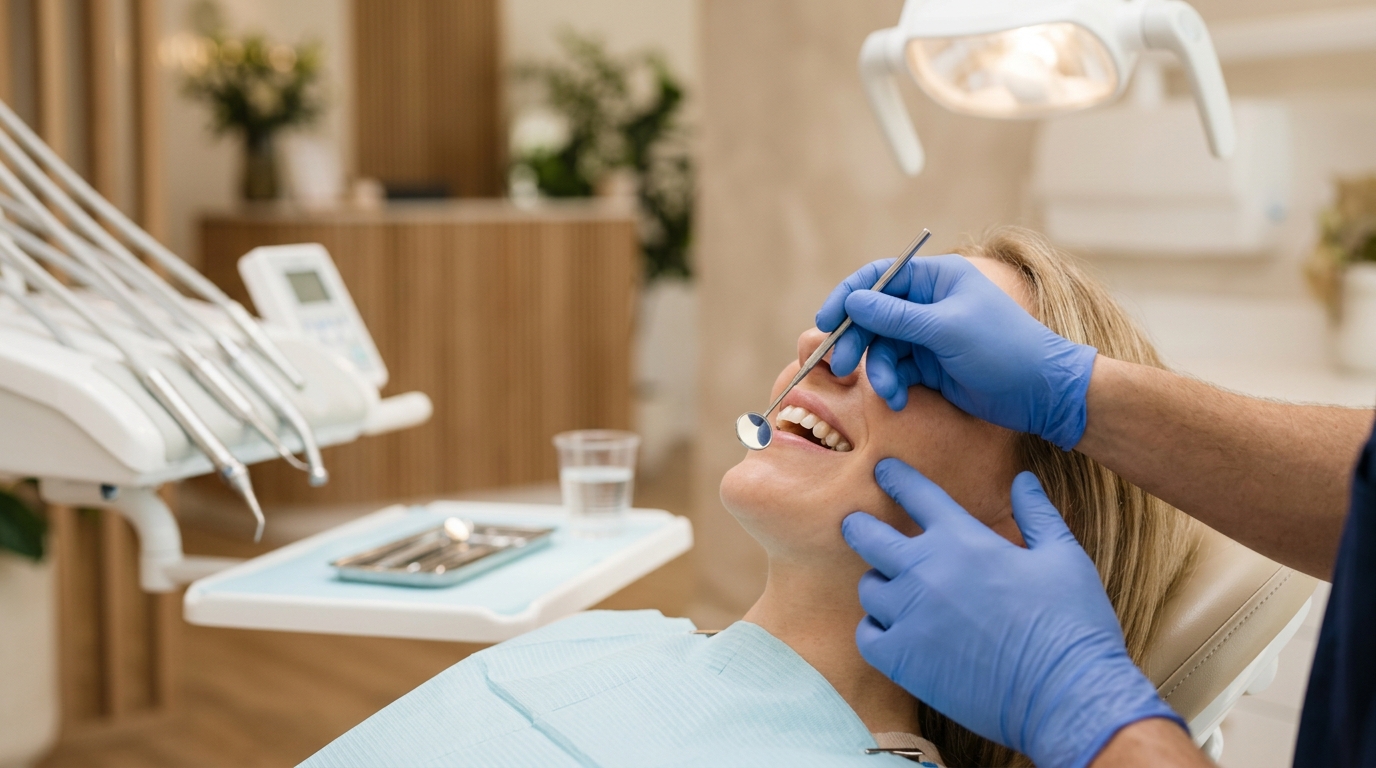
Full-mouth rehabilitation refers to a coordinated plan that restores or replaces most or all of the teeth in both jaws. It is not a single procedure but a sequence of treatments — which might include dental implants, crowns, bridges, periodontal work, and occlusal adjustments — carried out in a planned order over weeks or months. The term is used when the scale of dental breakdown or tooth loss goes beyond what a single isolated treatment can address.
People who reach this point usually arrive there by one of several routes: years of deferred dental care, severe tooth wear caused by grinding (bruxism) or acid erosion, extensive decay affecting multiple teeth simultaneously, significant tooth loss following trauma, or the long-term consequences of periodontal (gum) disease. In most cases, the problem is not purely cosmetic — there are functional issues with biting, chewing, or jaw alignment that also need addressing.
What a full-mouth rehabilitation plan typically includes
No two rehabilitation plans are identical, because no two mouths present the same combination of problems. What a clinician designs depends on which teeth remain and their structural integrity, the health of the supporting bone and gum tissue, the patient's jaw relationship and bite, and the long-term prognosis for each individual tooth.
A typical plan is built in phases. The first phase almost always addresses any active disease — infection, active decay, or gum disease — before any restorative work begins. Placing a crown over a tooth with untreated decay, or a dental implant into bone affected by uncontrolled periodontal disease, compromises the result from the outset. This preparatory phase is not optional, even if it adds time to the overall treatment.
The restorative phase then addresses missing teeth (typically with dental implants, bridges, or removable prostheses depending on the clinical situation) and damaged or weakened teeth (with crowns, inlays, or onlays). Where the bite relationship between upper and lower teeth is disrupted — which is common when multiple teeth have been lost or worn down — restoring the correct vertical dimension of the bite is a central part of the plan, not an afterthought.
In some cases, orthodontic treatment or jaw surgery is required as part of the overall plan, particularly where underlying skeletal or alignment issues have contributed to the damage. This is less common, but a thorough assessment will identify whether it applies.
Who is and is not typically a candidate
Full-mouth rehabilitation suits adults who have multiple teeth affected by decay, wear, trauma, or tooth loss, and whose remaining oral structures can support the intended restorations. Candidates are evaluated for bone density and volume (particularly where implants are planned), the health and attachment level of gum tissue, the presence or absence of active infection, and overall systemic health — since conditions such as uncontrolled diabetes or bisphosphonate use for osteoporosis can affect how bone heals around implants.
Patients who smoke are not automatically excluded, but smoking significantly increases the risk of implant failure and poor wound healing, and this forms part of the pre-treatment discussion at any responsible clinic.
People for whom full-mouth rehabilitation is not appropriate at a given point include those with active, uncontrolled gum disease that has not yet been treated, those with certain bleeding disorders or immunosuppressive conditions that have not been assessed by their physician, and, in some cases, those who grind their teeth severely without a plan to manage the habit — because unaddressed bruxism places extreme mechanical stress on restorations and substantially shortens their functional lifespan.
Realistic timelines
Full-mouth rehabilitation is not a rapid process, and the timeline varies considerably depending on what is involved. A plan that relies primarily on crowns and bridges — without implants — can sometimes be completed in a matter of weeks. A plan that includes multiple dental implants requires time for osseointegration: the biological process by which bone bonds to the implant surface. This typically takes three to six months, though the range varies between patients depending on bone quality and the technique used.
Where bone grafting is needed to augment insufficient bone before implant placement, additional healing time is required before implants can be placed. In complex cases, the total treatment timeline from initial assessment to final restoration can extend beyond a year.
For patients travelling from abroad, this has a practical implication: most full-mouth rehabilitation plans require more than one visit, spaced weeks or months apart. The first visit typically covers assessment, any initial preparatory work, and the start of the treatment sequence. Subsequent visits address each phase as it becomes due. The exact schedule is mapped out at the outset so that patients can plan their travel accordingly.
Risks and trade-offs
Full-mouth rehabilitation involves several treatment types, each carrying its own risk profile. Dental implants carry a risk of failure — defined as the implant not integrating with the bone, or integrating and later failing due to infection (peri-implantitis) or mechanical overload. The rate of this varies with patient factors, surgical technique, and aftercare, and individual risk should be discussed at consultation rather than assumed from population-level figures.
Crowns and bridges require reduction of the underlying tooth structure, which is irreversible. Once a tooth is prepared for a crown, it will always need to be crowned. This is not a reason to avoid the treatment when it is clinically indicated, but it is a trade-off that patients should understand before consenting.
Bite reconstruction — particularly raising or altering the vertical dimension — can initially feel unfamiliar or uncomfortable as the jaw musculature adapts. In most cases this settles over several weeks, but it is worth knowing that the adaptation period is real and occasionally longer than anticipated.
No restoration lasts indefinitely. Crowns, veneers, and bridges are generally expected to last ten to fifteen years or more under good conditions, but individual outcomes vary with oral hygiene, habits, and biological factors. Dental implants, if they integrate successfully and are well maintained, can function for considerably longer, but they are not immune to long-term complications.
What assessments happen before treatment begins
A thorough pre-treatment assessment is the foundation of any rehabilitation plan. This typically includes a full clinical examination of the teeth, gums, and jaw joints; a dental panoramic radiograph (OPG) to assess bone levels, tooth roots, and any existing restorations; and in cases where implants are planned, a cone beam computed tomography (CBCT) scan, which provides three-dimensional information about bone volume and the position of anatomical structures such as the maxillary sinus and inferior alveolar nerve.
Some clinicians also take full-arch impressions or digital scans to produce study models or a wax-up — a physical or digital mock-up of the planned outcome — before any irreversible treatment begins. This allows the proposed changes to bite and appearance to be evaluated before work starts, and it gives the patient a clearer picture of what is being planned.
Travelling to Turkey for full-mouth rehabilitation
Full-mouth rehabilitation is commonly sought by international patients in Turkey, with Istanbul and Antalya being the cities where the treatment is most frequently carried out. Both cities have established infrastructure for receiving patients from abroad, including international airports with direct connections from the UK and most of Western Europe.
Because full-mouth rehabilitation involves multiple phases, patients travelling from abroad typically plan for at least two separate visits. An initial trip of five to ten days is common for the assessment, preparatory work, and placement of implants or preparation of teeth for temporary restorations. A second visit — usually several months later, once osseointegration is complete — is scheduled for the placement of final restorations. The exact number of trips and their duration depends on the complexity of the individual plan.
Airport transfers and accommodation close to the treating clinic are routinely arranged for international patients undergoing this type of treatment. Patients are advised to confirm the full treatment schedule, the number of visits required, and the arrangements for any complications that might arise after they return home before committing to travel. Reviewing dental treatment packages available for international patients can give a clearer sense of how these multi-visit plans are typically structured.
Questions worth asking before you commit
- What is the treatment sequence and the rationale for it — why is each element being included?
- How many visits are realistically required, and what is the minimum time between them?
- What diagnostic imaging will be taken, and will a CBCT scan be included if implants are planned?
- Is a diagnostic wax-up or digital mock-up used before irreversible preparation begins?
- What happens if an implant fails to integrate, or if a crown or bridge requires attention after I return home?
- What maintenance and aftercare will be required once the rehabilitation is complete?
- If bone grafting is recommended, what is the source of the graft material and why is it being recommended in my case?
- What are the qualifications and clinical background of the dentist leading the plan, and who performs any specialist elements such as periodontal treatment or implant surgery?
Full-mouth rehabilitation is a significant undertaking in terms of time, clinical complexity, and cost. The questions above are not exhaustive, but they give a reasonable basis for evaluating whether a proposed plan has been thought through thoroughly — and whether the clinical team has been honest about what the process involves.